
For days now, an ad for an RTV television show has been running across Novi Sad. On digital billboards. With a typo.
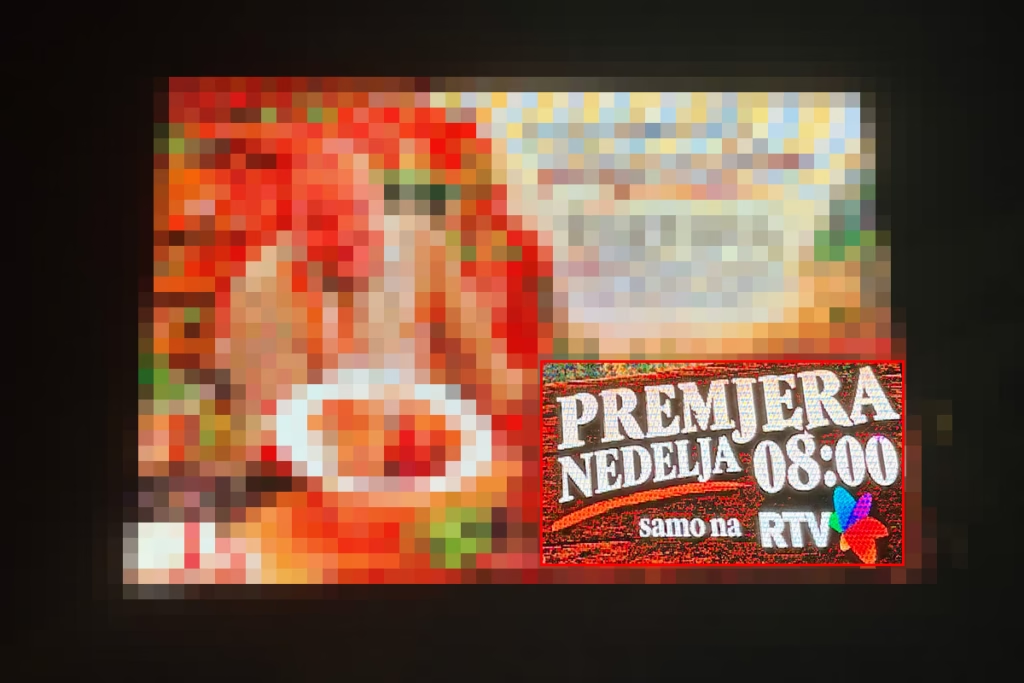
A typo can happen to anyone. It can slip through proofreading, make it all the way to print. That’s human. But how is it possible that nobody notices a typo on a digital billboard that’s been running across the town for days (and probably weeks)?
Maybe because the entire ad took four to six minutes to make, tops. Possibly even using the free version of ChatGPT. And because, judging by the result, nobody put much effort into either creating it or checking what had been produced.
I’ve spent my entire life paying attention to the visual landscape around me. Advertisements, billboards, graffiti, stickers, signs, even the chalk drawings kids scribble on sidewalks. All these things, however small or temporary, make up the visual identity of the spaces we live in.
And I’m becoming increasingly convinced that AI will make the entire world an uglier place.
Design and website templates have been around for decades. Design trends for even longer. But those very limitations, the repetition, and the availability of ready-made solutions often pushed people to try to create something different, something authentic, something of their own.
Because even when you used a ready-made template, there still had to be someone behind the final product who actually understood what they were doing. Someone with a certain level of technical knowledge, experience, more or less talent, a developed sense of taste, or at least some basic understanding of aesthetics.
With AI tools now so widely accessible, that barrier has practically disappeared. Today, almost anyone can create an advertisement, a visual identity, an illustration, a website, or just about anything else. And that, in itself, is a good thing. The democratization of tools was never the problem.
The problem begins when we start confusing access to tools with the ability to create something good.
We have to accept that more and more people with absolutely no experience, no basic understanding of design, and not the slightest sense of aesthetics will be able to shape our public visual spaces. Not because they’ve learned something new, but because they no longer need to know anything at all.
And no matter how much people believe AI can make up for a lack of knowledge, experience, and taste, there’s one thing it cannot do for them: give them the ability to recognize what’s good and what’s bad.
AI can generate a thousand different solutions in a matter of minutes. But if the person choosing between them can’t recognize quality, those thousand solutions aren’t worth much.
And that’s why I don’t think the world will become uglier because AI can’t create something beautiful. Quite the opposite. It can.
It will become uglier because it will matter less and less whether the person putting something out into the world actually understands what they’ve created.
And when the need for knowledge, effort, and standards disappears, so will much of what makes our everyday visual surroundings interesting, diverse, and authentic.
All that’s left is the hope that, eventually, we’ll become so saturated with the same ugly things everywhere we look that we’ll start longing for beauty again.